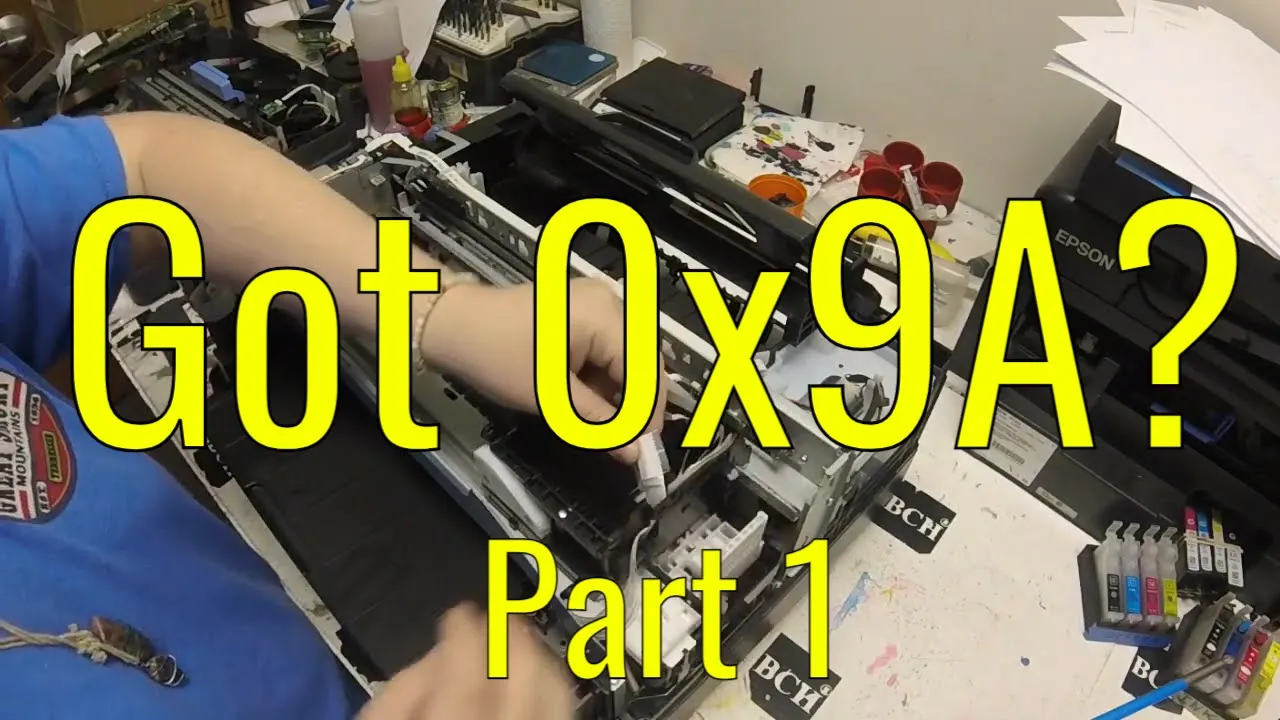
Epson printers may display Error 031006 alongside an E-01 / “Non-Printing Features Are Available” message when the printer detects a serious fault that prevents normal printing. In the video associated with this article, the issue is discussed in the context of electrical damage linked to ink leakage and short-circuiting, which can affect multiple internal components.
Reduce Refill Recycle (3R) shares educational information like this to help people understand what failures can happen, why they happen, and what to consider before creating more electronic waste.
What the error may indicate
In the video, the error is presented as having three likely causes:
- Damage to the motherboard
- Damage to the printhead
- Damage to both the motherboard and the printhead
The key takeaway is that the message can be connected to hardware-level electrical failure, not a simple setting, software, or paper/ink handling problem.
How ink leaks can lead to electrical damage
The video highlights a scenario where ink leakage ends up in areas where it shouldn’t be. If the printer is powered on while ink has reached sensitive electrical parts, the video explains that a short can occur. When that happens, components can overheat and fail-sometimes dramatically (including visible signs like smoke in the example shown).
From an e-waste reduction perspective, understanding this chain of events matters because it can help users recognize why some failures are preventable and why others may be irreversible once electrical damage occurs.
Why a “working” power-on state can still mean printing is disabled
A major point in the video is that a printer can sometimes turn on normally even when printing-related hardware is no longer functional. The discussion contrasts situations where:
- Certain failures prevent the printer from turning on at all, and
- Other failures allow the device to power up but leave printing disabled.
This distinction matters for troubleshooting decisions because it can change what a user expects to see (for example, “it powers on” does not necessarily mean the printing system is healthy).
When printhead damage is visible
In the video, the printhead area is examined and burn marks are shown on a flex cable, and the printhead connector area is described as burned. The message communicated is that once a printhead is burned in this way, it is typically not realistically repairable.
For readers focused on reuse and waste reduction, this is an important reality: sometimes “repair” isn’t possible for a damaged component, and the most sustainable outcome may involve preventing repeat failures and avoiding damage to replacement parts.
Why cable condition matters
The video also emphasizes that the flex cable can show damage from heat or electrical failure. A damaged cable can be part of the overall failure picture, because cables connect critical signals and power to the printhead system.
The broader lesson: when a printer experiences an electrical short, it’s not always one isolated part-multiple connected components can be affected.
Reducing future risk and avoiding repeat failures
The video’s example centers on a leak-driven short. The sustainability-minded takeaway is preventive:
- If there are signs of leaking ink internally, powering on the device may increase the risk of electrical damage.
- When a major electrical fault has occurred, replacement decisions should consider what might have caused the original failure so the same outcome doesn’t happen again.
Keeping printers in service longer is one way to reduce e-waste, but it works best when underlying causes (like internal ink leakage) are addressed so repairs or replacements aren’t immediately lost to the same failure.